
Disclaimer: Views in this blog do not promote, and are not directly connected to any L&G product or service. Views are from a range of L&G investment professionals, may be specific to an author’s particular investment region or desk, and do not necessarily reflect the views of L&G. For investment professionals only.
The worst of times; the best of times? Private markets react to an uncertain world
Private markets remain resilient amid global shocks. In this blog, we examine trends, key risks, and sector‑specific levers shaping these asset classes in 2026 to-date.

Private markets entered 2026 facing an unusually complex mix of forces: geopolitical tensions, lingering inflation pressures, and rapid technological disruption driven by artificial intelligence (AI). Despite this challenging backdrop, the underlying data suggests private assets are in a position of relative strength.
Amid uncertainty, fundamentals across private credit, infrastructure and real estate remain broadly intact. In our view, the key question for investors is not whether risks exist – they clearly do – but how each asset class absorbs and responds to them. Selectivity and resilience are as important as ever with dispersion across sectors, regions and strategies intensifying.
Private credit: Strength beyond the headlines
Despite persistent negative headlines, private credit continues to show a largely benign risk picture. Data through the final quarter of 2025 indicated that default and payment‑in‑kind (PIK) rates remained broadly rangebound[1]. Importantly, technology and software‑related loans are not currently exhibiting materially greater stress than the wider market.
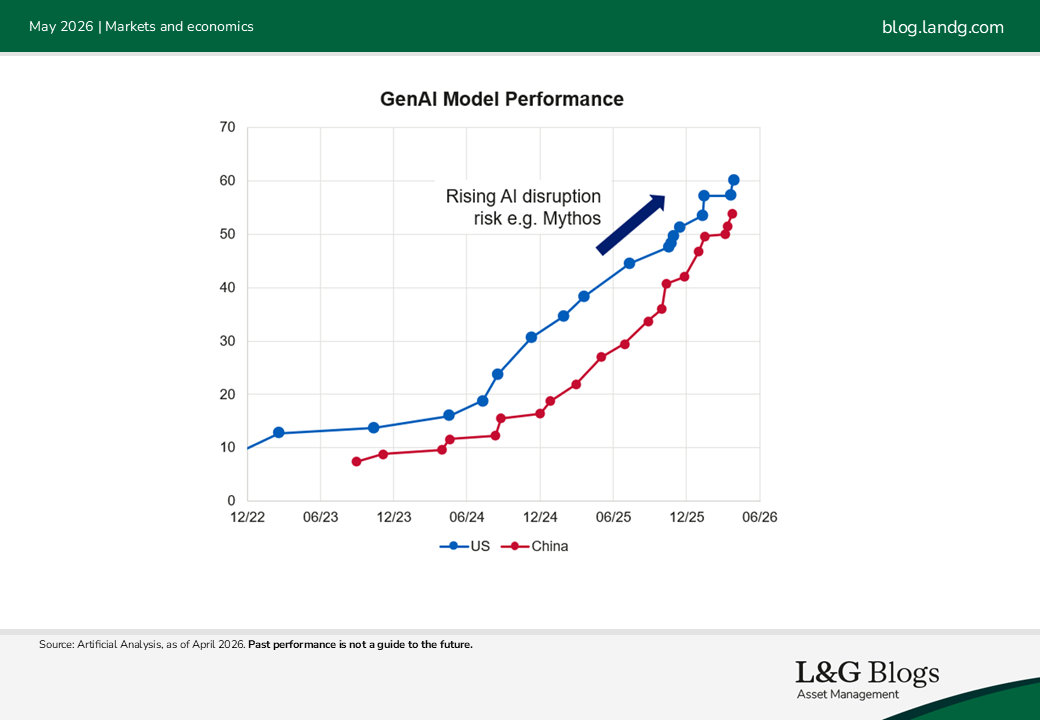
This stability matters because expectations of future deterioration are rising. AI‑driven disruption poses clear risks to certain business models, while a potential second wave of stagflation could weigh on corporate cash flows. However, starting conditions are comparatively healthy. We believe any deterioration will be manageable rather than systemic.
Market dynamics are also shifting. Yields have risen, spreads are finally expanding after years of compression and lending terms have become more favourable to creditors, reflecting a more cautious borrower environment.
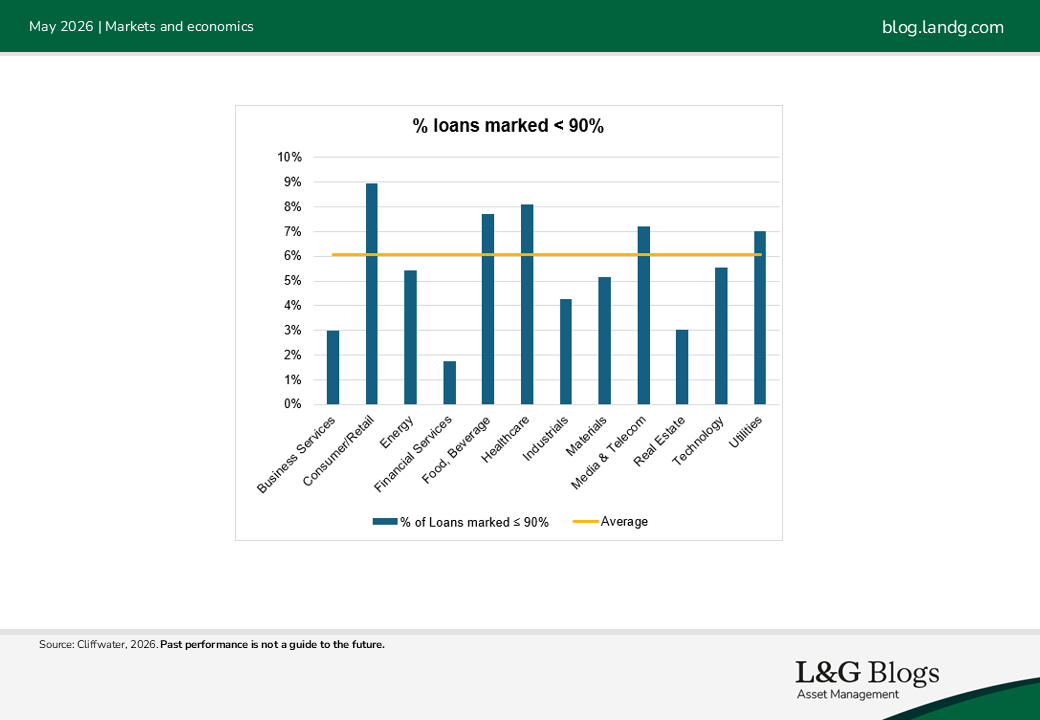
This doesn’t mean there aren’t areas that warrant close monitoring. Business development companies (BDCs), for example, have experienced a rise in net outflows[2] which could impact these vehicle’s liquidity and long-term performance if redemption requests remain elevated in the coming months.
As such, we continue to favour resilience within private credit allocations. Underwriting discipline and risk management will determine how portfolios navigate this period of uncertainty.
Infrastructure: Normalisation, not weakness
Infrastructure can be said to sit at the centre of the geopolitical and macroeconomic debate. While fundraising and transaction volumes slowed in the first quarter of 2026[3], this followed an unusually strong end to 2025. In our view, this suggests normalisation rather than the start of a downturn.
Return dispersion across sectors is now particularly pronounced in Europe, the Middle East and Africa (EMEA) infrastructure markets[4]. This suggests that sector-specific forces are increasingly driving returns for European infrastructure and highlights the growing importance of more strategic sector allocations beyond diversified portfolios for additional returns.
Considering the conflict in the Middle East, we believe energy and utilities assets could prove more defensive in a potentially higher‑inflation regime, while volume‑sensitive transport assets are more exposed to demand slowdowns. Additionally – and as we’ve covered on the blog previously – the conflict has also reinforced the strategic importance of energy security.
Beyond energy, we see demand for digital infrastructure remaining strong. Demand for AI compute capacity continues to outpace available supply as large technology firms press ahead with substantial capital expenditure plans. While development costs may rise, we believe the structural growth story for data centres and related infrastructure remains intact.
Real estate: Focus on income
Direct real estate began the year with solid momentum. While we believe rising market interest rates present downside risks to capital values, we’ve seen direct real estate proving less sensitive than listed real estate investment trusts (REITs), with many parts of the market helped by higher starting yields following the 2022 repricing.
Forecasting has, however, become challenging in this uncertain environment, making scenario‑based analysis more appropriate, in our view, than point forecasts. An upside scenario – involving limited economic scarring and a return to relative stability – remains possible, though it is increasingly time‑dependent. Conversely, we believe a stagflationary outcome has become more plausible, particularly given elevated energy prices, although is not a base case.
Real estate’s resilience lies in its operational flexibility. Active asset management of both income and physical specification provides potentially valuable levers. We also see location quality and operator selection becoming increasingly critical, particularly in sectors where rising costs can be passed through efficiently to end‑users.
One additional factor is supply. Construction viability may deteriorate as material and energy costs rise. While this poses challenges for developers, it also reinforces structural undersupply of high‑quality stock, which has the potential to underpin rental growth in the medium term.
The takeaway
Private markets are navigating a more volatile and geopolitically charged world, but we believe they are doing so from a position of relative strength. Across credit, infrastructure and real estate, fundamentals remain largely sound, even as risks become more asymmetric and outcomes more dispersed.
Assumptions opinions and estimates are provided for illustrative purposes only. There is no guarantee that any forecast will come to pass.
Past performance is not a guide to the future.
[1] Source: Cliffwater, 2026
[2] Source: Cliffwater and JPMorgan, as of 2026
[3] Source: Infralogic, as of April 2026
[4] Source: MSCI, 2026



Recommended content for you
Learn more about our business
We are one of the world's largest asset managers, with capabilities across asset classes to meet our clients' objectives and a longstanding commitment to responsible investing.