Disclaimer: Views in this blog do not promote, and are not directly connected to any L&G product or service. Views are from a range of L&G investment professionals, may be specific to an author’s particular investment region or desk, and do not necessarily reflect the views of L&G. For investment professionals only.
Geopolitics, AI and electrification: three forces driving clean energy growth
Renewables should be set to benefit from a range of tailwinds, from today’s focus on energy sovereignty to a long-term shift towards electrification.
The following is an extract from our Q3 2026 ETF outlook.
Key takeaways:
|
Present: Iran conflict reinforcing energy security dynamics
Recent geopolitical tensions, particularly the conflict involving Iran, have reinforced the importance of energy security and acted as an additional catalyst for the clean energy transition.
While the episode underscores that oil remains a critical pillar of the global energy system – including the unprecedented release of 400 million barrels from emergency reserves – it also highlights the vulnerabilities associated with concentrated energy supply chains. Unlike previous shocks, however, the current environment is characterised by a more resilient power system in which renewable energy plays a significantly larger role.
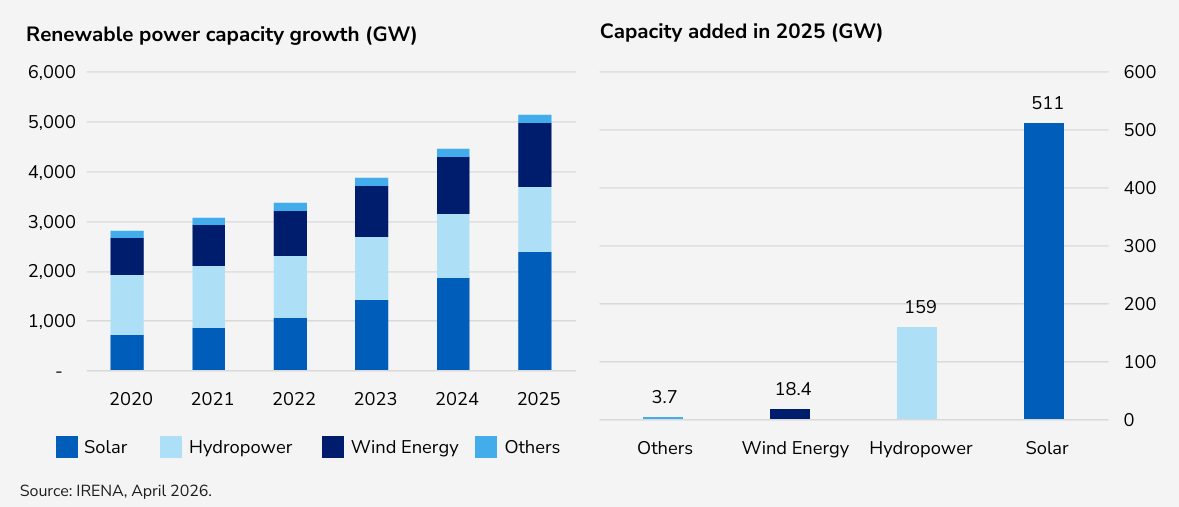
This has helped limit the immediate impact of volatility, with countries that have higher renewable penetration proving more resilient to energy price shocks. Renewable energy accounted for close to 50% of global electricity capacity in 2024, reflecting the growing role of low-carbon sources in the energy mix. At the same time, electrification is becoming central to modern energy security, supported by investments in grid infrastructure, storage, and digital technologies. Importantly, renewables provide locally sourced energy once infrastructure is established, reducing reliance on geopolitically sensitive supply chains.
The Iran conflict therefore reinforces a key structural lesson: energy security increasingly depends on reducing the reliance on a single source. This is accelerating investment not only in renewable generation, but also in grid modernisation, energy storage, and supply chain diversification – particularly in Western markets seeking to reduce dependence on both fossil fuels and concentrated manufacturing hubs. As a result, clean energy is no longer solely an environmental theme but is increasingly positioned as a core pillar of long-term economic and energy resilience.
Mid-term: adding net-positive AI to net-zero emissions
AI and data centres are emerging as powerful demand drivers for electricity, reinforcing the investment case for grid infrastructure and energy systems. The sector benefits from structural growth linked to the rapid expansion of AI workloads, with a clear rotation into energy storage and grid infrastructure as investors increasingly focus on power availability, reliability and speed of deployment. Electricity consumption from AI-focused data centres grew by 50% in 2025. While data centres currently represent around 1.5% of global electricity demand, the International Energy Agency expects this to double by 2030, highlighting a significant incremental demand impulse.[1]
Beyond demand growth, AI is also improving the efficiency and resilience of electricity networks. Advanced analytics and machine learning are being deployed to optimise grid operations in real time, improving demand forecasting, balancing supply and demand, and enhancing the integration of intermittent renewable energy sources such as solar and wind. AI also enables predictive maintenance by identifying potential faults before they occur, reducing outages and improving system reliability.
More broadly, digitalised grid infrastructure – supported by smart sensors and real-time data – enhances visibility across networks and allows for faster, more adaptive responses to shifts in supply and demand. This evolution is expected to coincide with a substantial increase in global grid investment, reflecting the need to modernise infrastructure to support both electrification and AI-driven demand.
From a company perspective, Vertiv* represents a direct beneficiary of this trend. The company provides critical digital infrastructure to data centres, including power systems, thermal management (such as liquid cooling), UPS solutions, and services, making it a key enabler of AI infrastructure deployment.
Quanta Services*, meanwhile, is an EPC provider for grid and energy infrastructure. Its electric segment delivers end-to-end solutions across transmission, distribution, and renewable generation, positioning it to capture the long-duration investment cycle in grid expansion and modernisation.
Long term: energy transition and grid build-out
The global energy system is electrifying at pace, with electricity generation expanding across all sources except oil. In 2024, generation from low- and zero-carbon sources exceeded 40% of total global electricity production 2 , marking a structural shift in the composition of energy supply.
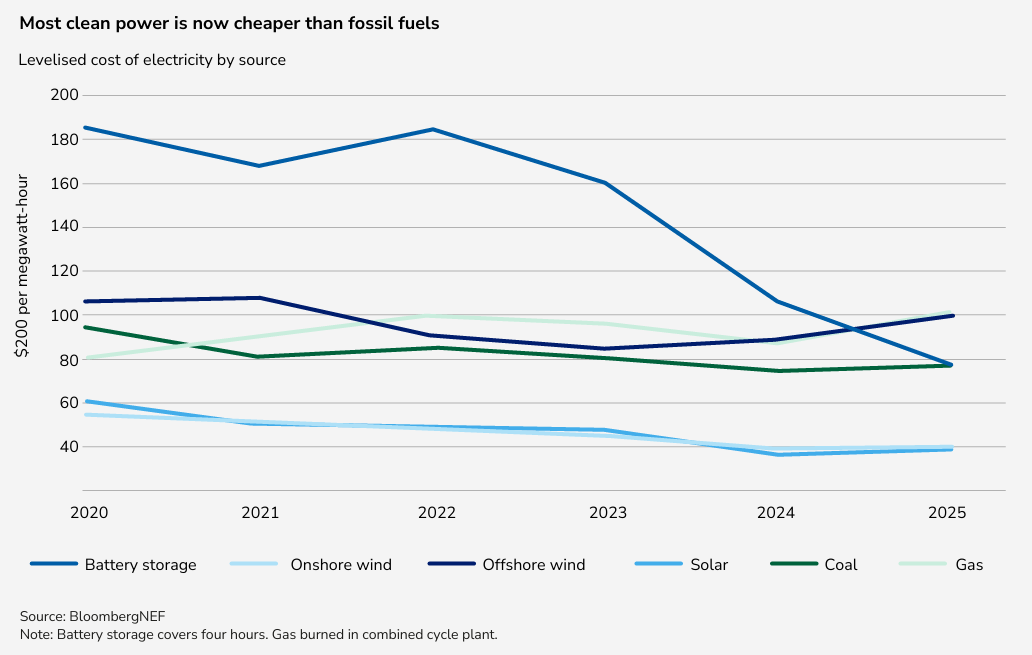
At the same time, the cost of clean energy has declined steadily, making renewables significantly more competitive relative to fossil fuels. This cost deflation has supported continued investment across the clean energy value chain, particularly among traditional component suppliers, original equipment manufacturers (OEMs), and independent power producers (IPPs), which remain at the core of the energy transition.
Company examples highlight how this structural trend is being embedded across the industry.
- ERG* is a renewable IPP with strong wind and solar exposure, having transitioned from its origins as an oil refiner (pre 2008) into a pure wind and solar business model by 2023. The company is now focused on consolidating its portfolio, with particular emphasis on wind repowering and battery energy storage systems
- SMA Solar*, a German manufacturer of solar inverters and storage solutions, operates across residential, commercial and utility-scale markets. It is currently undergoing a restructuring programme aimed at improving profitability, with its Home & Business Solutions division showing signs of recovery in early 2026 after a challenging 2025.
- Nordex*, a German onshore wind turbine manufacturer, plays a key role in the European wind buildout. Following its integration with ACCIONA Windpower*, it combines strong regional exposure with a high-margin service business.
*For illustrative purposes only. Reference to a particular security is on a historic basis and does not mean that the security is currently held or will be held within an L&G portfolio. The above information does not constitute a recommendation to buy or sell any security.
Assumptions, opinions, and estimates are provided for illustrative purposes only. There is no guarantee that any forecasts made will come.
[1] Source: BofA, April 2026

Recommended content for you
Learn more about our business
We are one of the world's largest asset managers, with capabilities across asset classes to meet our clients' objectives and a longstanding commitment to responsible investing.