
Disclaimer: Views in this blog do not promote, and are not directly connected to any L&G product or service. Views are from a range of L&G investment professionals, may be specific to an author’s particular investment region or desk, and do not necessarily reflect the views of L&G. For investment professionals only.
Setting a sustainability target is one thing; delivering on it is another. For investors, understanding whether ambition is translating into real-world outcomes is often far more challenging. That challenge came into focus during a recent visit to Tesco's* low-carbon concept farm. An unprecedented heatwave[1] provided a fitting backdrop to discussions ranging from soil biology to artificial intelligence (AI). Our visit highlighted a simple reality: delivering climate and nature ambitions is often messier and more complex than we might hope.
A living laboratory
What makes this concept farm particularly interesting is how it functions as a holistic laboratory, built in collaboration with committed farmers, suppliers, and technicians. According to Tesco*, one of the farm's aims is to "test and learn" from a range of low-carbon approaches to de-risk adoption both within its supply chain and further afield.
The project is trialling a range of approaches, from precision agriculture and novel fertilisers to resource-efficiency measures and climate adaptation strategies. The objective is not simply to identify what reduces emissions while supporting nature, but to understand what works, where, and under what circumstances – to develop ‘recipes’ that are practical, scalable and commercially viable.
For investors, we believe this is particularly relevant. Disclosures on governance, targets, capital allocation and risk management help build a picture of how companies are approaching the transition. Visits such as this provide context that disclosures alone might not: insight into how evidence is generated, trade-offs are navigated and collaboration is turning ambition into implementation. As companies refine their climate communications, helping stakeholders understand that process may become an increasingly valuable complement to traditional disclosure.
Observations on the ground
Three themes stood out from our visit.
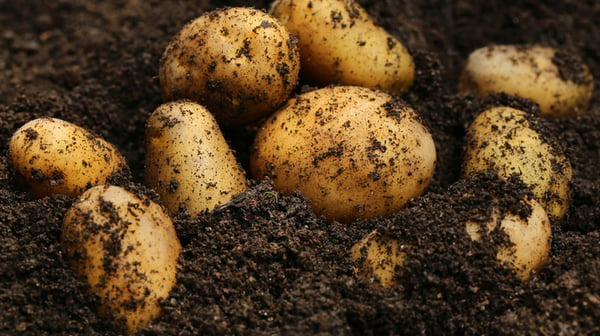
• Evidence takes time. Potatoes are typically grown in the same field only once every seven years.[2] Combined with natural variation in weather and hyperlocal growing conditions, this means generating robust trial data can be a slow and often uncertain process. Climate progress may be measurable, but it is rarely immediate.
• Innovation is capital intensive. New equipment, fertilisers and farming techniques can require significant upfront investment, while benefits may emerge gradually and remain uncertain. For farmers operating with tight margins and high volatility, confidence that an intervention will deliver is often just as important as the intervention itself.
• Trust matters as much as technology. The challenge is not just inventing new solutions but encouraging adoption. Farmers need to trust that new approaches can deliver results, suppliers need assurances that data shared will be used appropriately, and retailers must help align incentives across the value chain.
Taken together, these observations highlight an important point: climate transition is not simply a technology challenge. It is also a challenge of evidence, economics and implementation.
The visit also highlighted the broader question: how can evidence of climate progress be made more visible? While a farm visit can provide valuable insight, it not a scalable transparency solution. Most investors cannot visit every supplier, and most customers cannot walk around a potato field before deciding what to buy for dinner.
Tesco* described how QR codes – just now starting to be used with an aim to roll out fully by 2027[3] – could unlock opportunities to share much richer information than currently possible with traditional barcodes. This could help connect products more directly to where and how they were produced, potentially including information on sustainability credentials. Tesco* has already begun exploring this concept. Earlier this year, potatoes from the low-carbon concept farm reached supermarket shelves with dedicated packaging and a QR code linking customers to information about the initiative and the farming practices being tested. This followed low-carbon broccoli from the farm being made available last year. The company has indicated its intention to further broaden the range of foods that Tesco* describes as low-carbon available in store.
As investors, we’re excited about the potential this creates. We believe that initiatives such as the concept farm generate evidence that climate and nature commitments could translate into real-world outcomes. Greater transparency could make that emerging evidence more visible not only to investors, but also directly to customers. In our view, approaches that make progress credible, accessible and relevant to purchasing decisions have potential to create shareholder value. We explore this theme in a separate blog. Ultimately, we believe investors will need to judge initiatives such as this one both on the evidence they generate – do they support lower emissions, stronger resilience or improved resource efficiency? – and the extent to which successful approaches can be adopted across mainstream operations in a commercially viable way.
Food for thought
We are grateful to the farmers, suppliers and Tesco* colleagues who shared their experiences and insights so openly. Their willingness to discuss both successes and challenges highlights how climate progress is often built through years of experimentation, partnership and learning.
For investors, understanding that process may be just as important as understanding the targets themselves. Behind every climate commitment sits a series of practical decisions, trade-offs and innovations. Seeing some of that work first-hand left us with a greater appreciation for both the complexity of the challenge and the importance of generating credible evidence to support progress.
Case study shown for illustrative purposes only. The above information does not constitute a recommendation to buy or sell any security.
[1] https://www.metoffice.gov.uk/about-us/news-and-media/media-centre/weather-and-climate-news/2026/heatwave-continues-as-uk-records-unprecedented-run-of-35c-days
[2] https://www.potatopro.com/news/2026/longer-potato-rotations-strengthen-uk-farming-higher-productivity-and-sustainable
[3] https://www.gs1uk.org/standards-services/get-market-ready/qr-codes-powered-by-gs1/qr-codes-powered-by-gs1-retailers
* For illustrative purposes only. Reference to a particular security is on a historic basis and does not mean that the security is currently held or will be held within an L&G portfolio. The above information does not constitute a recommendation to buy or sell any security.

Recommended content for you
Learn more about our business
We are one of the world's largest asset managers, with capabilities across asset classes to meet our clients' objectives and a longstanding commitment to responsible investing.