
Disclaimer: Views in this blog do not promote, and are not directly connected to any L&G product or service. Views are from a range of L&G investment professionals, may be specific to an author’s particular investment region or desk, and do not necessarily reflect the views of L&G. For investment professionals only.
US Fed hike reinforces the case for dynamic duration management
The recent rise in front-end yields amid a shifting outlook for US rates has reinforced our belief in a dynamic approach to duration.
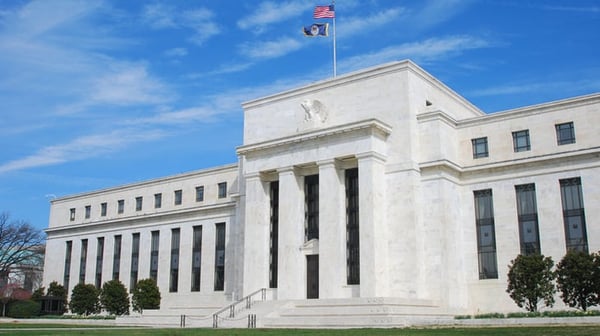
The US Federal Reserve (Fed) hiked rates on Wednesday by 25 basis points (bps), to a midpoint of 3.88%, reversing the last rate cut made at the end of 2025.
This move was not expected as recently as a month ago, but investors rapidly priced in a hike following Kevin Warsh’s pragmatic speech at the Jackson Hole Symposium on 28 August, saying that inflation would need to move down to the Fed’s objective clearly and at sufficient speed or else the Fed would have work to do. Subsequent inflation data surprised to the upside, laying the path for last night’s hike.
While the hike itself is noteworthy, what stands out most is how quickly market expectations changed. In such an environment, static duration positions can leave investors vulnerable to sharp market repricing. We believe this underscores the value of dynamic duration management.
Significant yield moves amid uncertainty over the Fed’s path
There remains considerable uncertainty as to future policy decisions, particularly relating to whether the Fed is embarking on a series of moves in a new cycle or simply carrying out a precautionary insurance hike, confident that inflation will now fall to target. However, the market moves have already been significant, with 2-year Treasury yields up 50bps since the day before the Jackson Hole speech to last night’s close.
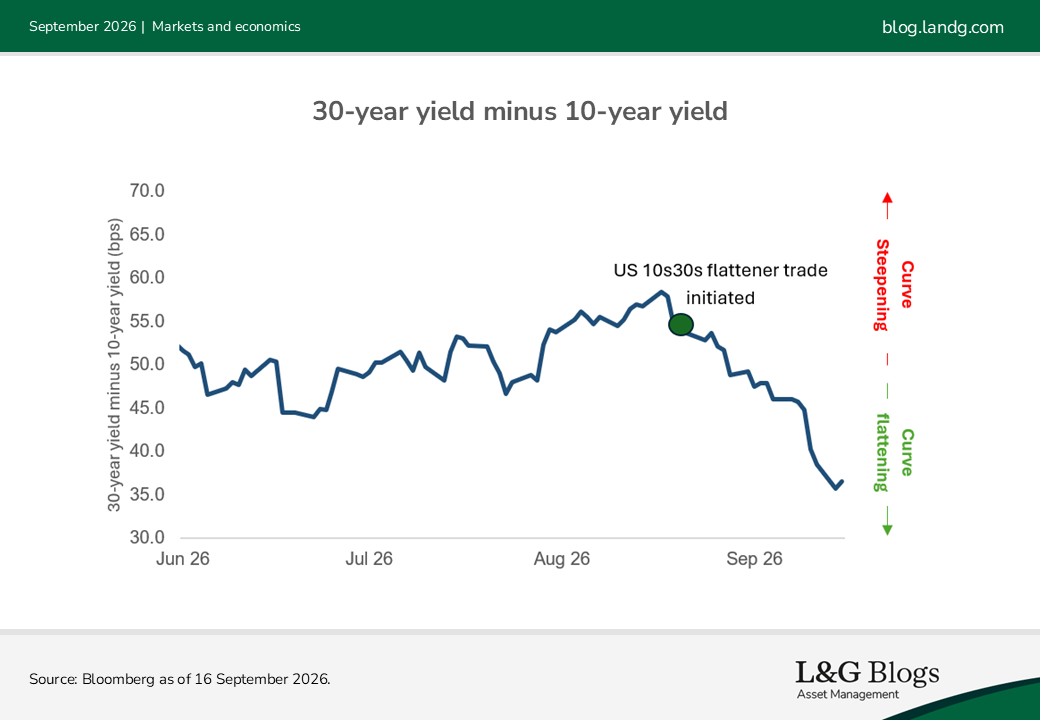
Indeed, such increases have been repeated across other bond markets, with German 2-year yields up 36bps, while the equivalent UK bond yield has risen 39bps. Curves have generally flattened, helped in part by US Treasury Secretary Scott Bessent’s announcement of larger long-dated bond buybacks. The 30-year Treasury yield, for example, is only 17bps higher over the same period.
Interestingly, equity markets and credit spreads have so far been resilient despite such large yield moves. However, total returns for all fixed income asset classes have been negatively impacted, and we have also seen higher volatility across the AI sector in equity markets, partly due to funding uncertainty.
Prepare, don’t predict: Key principles for managing duration and risk
This episode reinforces three of our key investment principles:
- First, since COVID the interest rate environment has shifted to a rising trend. Inflation has proved sticky, with a combination of loose fiscal policy, deglobalisation and the desire for energy security likely to keep upward pressure on yields over the medium term, in our view.
- That said, inflation and interest rates are very hard to accurately forecast over the short term. We prefer to look for examples of consensus overconfidence that are vulnerable to data or policy shifts. In this case, we thought the consensus was overconfident that the Fed would remain on hold for the remainder of 2026, and the associated trend of yield curve steepening. Our addition of global curve flatteners to portfolios has helped to protect returns as this confidence evaporated.
- Finally, in a world of sticky inflation, we believe duration needs to be managed dynamically. Its usual hedging role against risk assets – credit spreads and equities – can weaken or fail when inflation fears rise, as yields and risk assets can sell off together. In those periods, we believe duration exposure should be reduced or reshaped, as we have done through curve flatteners.
How we are positioned against diverging macro outcomes
For now, we continue to have a constructive view on credit exposure within the unconstrained bond portfolios. We think the near-term chance of a significant economic downturn is low. Therefore we continue to position for carry by targeting higher-yielding credit at the short end of the curve, such as subordinated European banks, subordinated US utility companies and tactical opportunities within emerging markets, hyperscaler debt and business development companies (BDCs). Of course, the carry opportunities presented by these assets must be weighed carefully against credit, liquidity, market and issuer-specific risks.
Looking ahead, we are very sensitive to how investors perceive the biggest risks to the macro backdrop.
If inflation pressures continue to dominate, then the Fed should remain hawkish and bond yields could continue to shift higher, necessitating a lower sensitivity to duration within the portfolios.
If we start to see bond market volatility negatively impacting growth expectations, we would be minded to increase our duration exposure. We’ll monitor inflation and wage data, as well as how the latest rising in energy prices impact consumer spending. We will also be mindful of higher volatility within credit markets that could undermine the outlook for hyperscaler infrastructure funding.
Bottom line
The hawkish shift by the Fed has resulted in what appears to be attractive bond yields. We agree that this represents a potential opportunity for investors, but the latest episode has reinforced our belief that duration needs to be managed dynamically. We will continue to follow this philosophy given the uncertain times ahead.
Assumptions, opinions, and estimates are provided for illustrative purposes only. There is no guarantee that any forecasts made will come to pass.



Recommended content for you
Learn more about our business
We are one of the world's largest asset managers, with capabilities across asset classes to meet our clients' objectives and a longstanding commitment to responsible investing.