Disclaimer: Views in this blog do not promote, and are not directly connected to any L&G product or service. Views are from a range of L&G investment professionals, may be specific to an author’s particular investment region or desk, and do not necessarily reflect the views of L&G. For investment professionals only.
Chart of the month: A tale of two energy markets
This month, we assess the diverging paths of oil and natural gas prices.
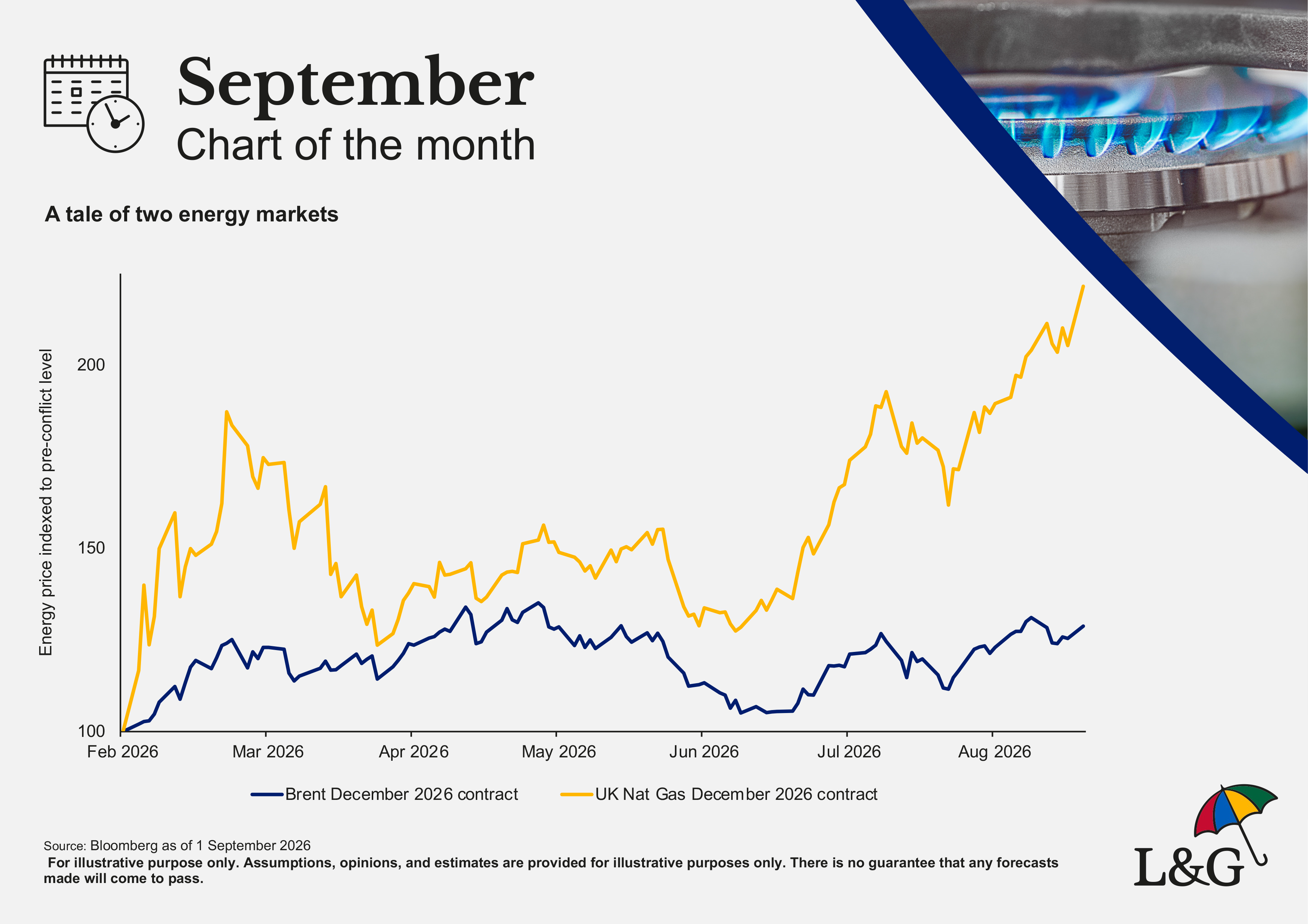
In a volatile world, the conflict in the Middle East has been the defining geopolitical event of 2026 (so far) from a market perspective, given the critical role the Strait of Hormuz plays in global oil supplies. Despite the conflict’s persistence and statements from Iran that the strait remains closed, oil prices have been relatively contained in recent weeks. Brent crude remains well below the psychologically important threshold of $100 per barrel.
In part, the muted rise in oil prices reflects an easing of concerns over disruption in the strait. Sea mine clearance operations by the US military have helped increase the willingness of tankers to risk passing through the strait with their transponders turned off. These ‘ghost’ ships have helped boost oil supplies from the Gulf, by some measures towards two-thirds of pre-conflict levels.
However, the natural gas market is more fragile. Q-Max ships, an important type of tanker used to export Qatari liquified natural gas (LNG), are over 300 metres long and 50 metres wide. Carrying a quarter of a million cubic metres of sub-zero LNG, they are difficult to move through the strait unnoticed. Consequently, LNG supplies to the UK and Europe, which, unlike the US, are significant net importers of natural gas, remain uncomfortably tight as autumn begins. We believe this has contributed to a decoupling of oil and natural gas prices in the region, with potentially substantial economic effects.
For example, our economists estimate that higher energy prices could add up to 0.75 percentage points more to year-on-year inflation in the UK than in the US. This poses a challenge for the Bank of England and European Central Bank, increasing pressure for tighter policy while squeezing consumer real incomes and, ultimately, corporate profits.
Within equities, we currently see more attractive opportunities in markets where consumers are better insulated from the effects of higher natural gas prices. Particularly the US Nasdaq, for which we believe earnings visibility is greater as the artificial intelligence theme continues to play out, and cautious sentiment looks vulnerable.
The value of an investment and any income taken from it is not guaranteed and can go down as well as up, and the investor may get back less than the original amount invested. Assumptions, opinions, and estimates are provided for illustrative purposes only. There is no guarantee that any forecasts made will come to pass.

Recommended content for you
Learn more about our business
We are one of the world's largest asset managers, with capabilities across asset classes to meet our clients' objectives and a longstanding commitment to responsible investing.