
Disclaimer: Views in this blog do not promote, and are not directly connected to any L&G product or service. Views are from a range of L&G investment professionals, may be specific to an author’s particular investment region or desk, and do not necessarily reflect the views of L&G. For investment professionals only.
Robotics, AI and the next productivity frontier
After spending time with renowned roboticist and Professor of Computer Science Dr Henrik Christensen at a recent client event in London, Matthew Kemp explores the remarkable advances in robotics and AI – and how they could change the working world.
Key takeaways
- Robots are becoming more useful, but the most immediate opportunities are likely to come from practical, task-specific applications rather than humanoid machines.
- AI can improve efficiency and revenue potential when it is built on strong data foundations, deployed with clear business purpose and shaped by human feedback.
- The future of work is likely to be less about replacing people wholesale and more about helping them avoid repetitive, physically demanding or potentially hazardous tasks.
I recently had the privilege of spending several days in London with renowned roboticist and Professor of Computer Science Dr Henrik Christensen. Fresh from publishing the US Robotics Roadmap for US Congress, Dr Christensen shared his views on the enormous potential that lies ahead. In this blog, I’ve summarised the key themes.
What robots can and can’t do
Public expectations have often run ahead of what robots can actually do. The image of intelligent machines moving freely through homes, anticipating human needs and handling every domestic task is still some distance from reality, Dr Christensen said. Robots continue to struggle with activities that humans find simple because these activities require judgement, context and dexterity. A household robot putting away groceries, for example, needs to understand what belongs in a fridge, cupboard or cleaning cabinet.
This is why “common sense” remains such an important frontier in robotics. It is not enough for a machine to recognise an object. It also needs to understand how that object is used, where it belongs and what action is appropriate in a given setting. Progress is being made, but today’s robots are better suited to structured environments where tasks can be defined clearly and repeated consistently.
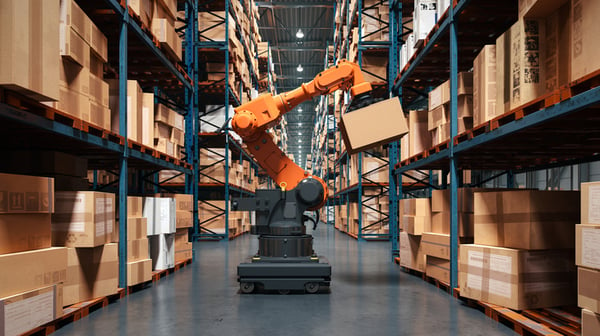
That does not mean the opportunity is limited. In logistics and warehousing, robots are already being used at scale by large operators, while advances in sensors, computing and AI could make these capabilities more accessible to medium-sized companies. Dr Christensen also highlighted that humanoid robots remain overhyped relative to more practical robotic systems designed for specific tasks. For investors, that distinction matters. The near-term value may be found less in machines that look human and more in systems that solve real operational bottlenecks.
How AI can increase efficiency and drive higher revenues
Dr Christensen also underlined that AI is not a magic layer that can be applied to any business and expected to deliver immediate value. Its usefulness depends heavily on the quality, structure and security of the data underneath it. Organisations first need to get their data foundations right before they can deploy AI effectively.
This is particularly relevant for investors assessing the commercial implications of AI. A business may have impressive technology, but the investment case should be informed by whether that technology improves the profit and loss account, supports better decision-making, creates efficiencies or opens new revenue opportunities.
The most compelling opportunities may come when AI is placed directly into operational workflows. That means designing tools for people who make decisions every day: supply-chain managers, field workers, logistics teams, government employees and other non-specialist users. Human feedback is essential, both to improve the system and to ensure that the technology reflects real-world needs.
What robotics and AI could mean for the future of work
Perhaps the most important insight from Dr Christensen was that robotics should not be framed as a story of AI-augmented machines replacing people. In many areas, he argued, robots are more likely to empower workers by taking on tasks that are repetitive, physically demanding or dangerous.
That does not mean the labour market will be unaffected. AI may have a significant impact on white-collar roles, while robotics may change the nature of work in manufacturing, logistics and other sectors. But the likely direction is more nuanced than a simple replacement narrative. Many tasks require human judgement, adaptability and social understanding beyond the capabilities of today’s systems. In practice, the future may involve people and machines working together, with robots handling the more repetitive or hazardous elements and humans focusing on problem-solving and higher-value activity.
There are also important questions around regulation, ethics and privacy. Dr Christensen was clear that society needs appropriate oversight of AI, particularly where systems influence decisions or handle sensitive data.
Tomorrow’s world
I came away from my time with Dr Christensen optimistic that robotics and AI can help address real-world problems that matter to ordinary people. That could mean more efficient supply chains, improved healthcare and a reduced need for physically dangerous tasks. Progress may not arrive in the form of a humanoid robot in every home, but it could still be transformative.
If the next phase of robotics and AI is focused on practical applications that help people live and work better, the years ahead could bring not just productivity gains, but tangible improvements in everyday life.
If you enjoyed this blog you might enjoy our recent podcast, where I discussed these themes with Dr Christensen.

Recommended content for you
Learn more about our business
We are one of the world's largest asset managers, with capabilities across asset classes to meet our clients' objectives and a longstanding commitment to responsible investing.