
Disclaimer: Views in this blog do not promote, and are not directly connected to any L&G product or service. Views are from a range of L&G investment professionals, may be specific to an author’s particular investment region or desk, and do not necessarily reflect the views of L&G. For investment professionals only.
Cash segmentation (a reprise)
With upward sloping money market curves and central banks again assessing the potential impact of energy supply disruption, we thought it a good time to revisit the topic of cash segmentation.

In August 2022, we published a two-part blog series (Putting cash in its place and Cashing in) which described how treasurers, pension schemes and insurers can access potentially higher returns by segmenting their cash.
Market (re) pricing, 2022
At the time, the Federal Reserve, Bank of England (BoE) and European Central Bank (CB) had already begun to move away from ultra-low, and even negative, interest rates.
In July 2022, the Fed had increased its target band by 75bps (to 2.25-2.50%), the ECB lifted its deposit rate by 50bps (to 0.00% after eight years of negative rates!), and in early August the BoE increased the bank rate by 50bps (to 1.75%).
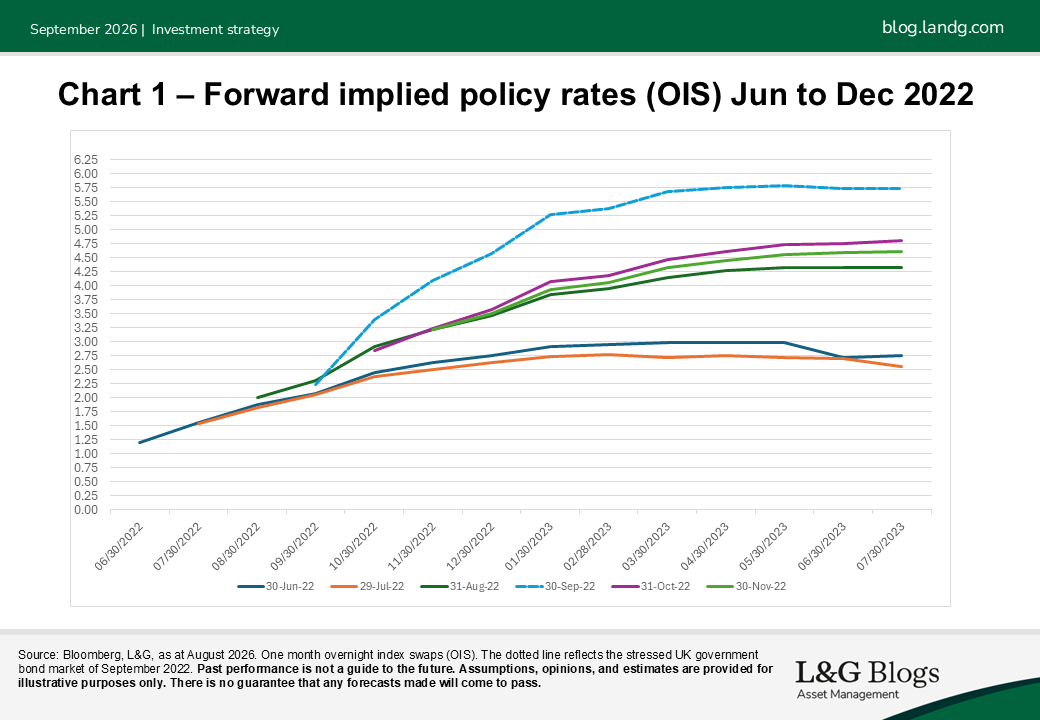
In hindsight, these were minor adjustments. Policymakers had underestimated the path of inflation, and in the UK in particular, money markets rapidly priced in more aggressive policy tightening (see chart 1).
Market (re) pricing again, 2026
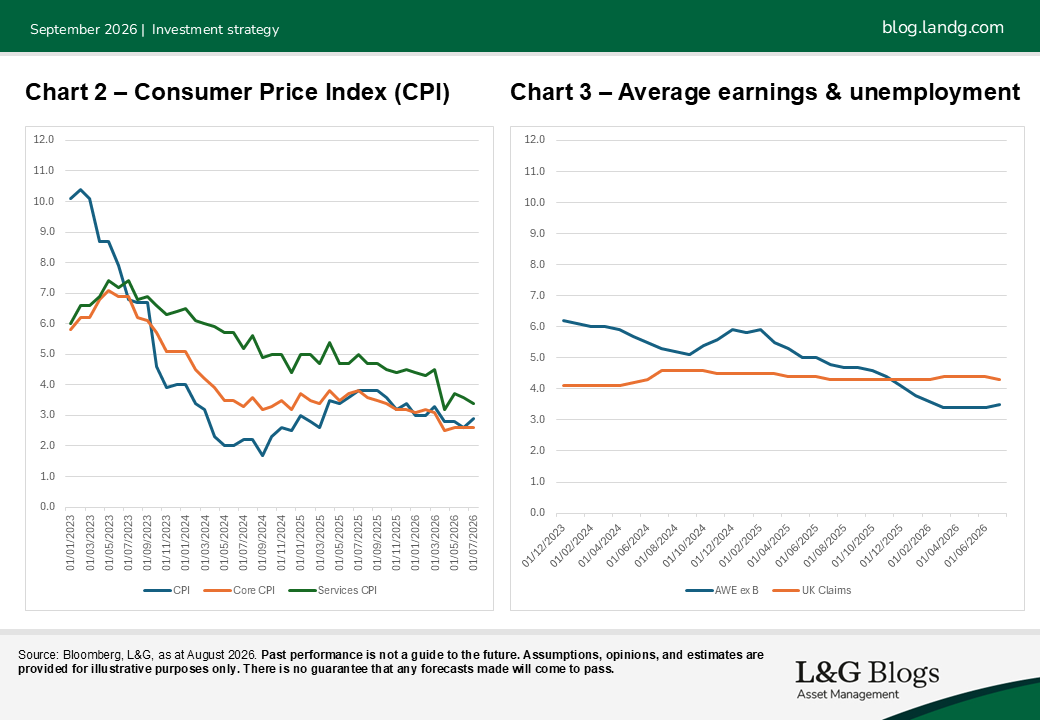
Early this year, market pricing and Bank of England communication reflected an easing policy bias.
Wage inflation was slowing and, with unemployment edging higher, there was increasing evidence of a softening labour market (see charts 2 and 3).
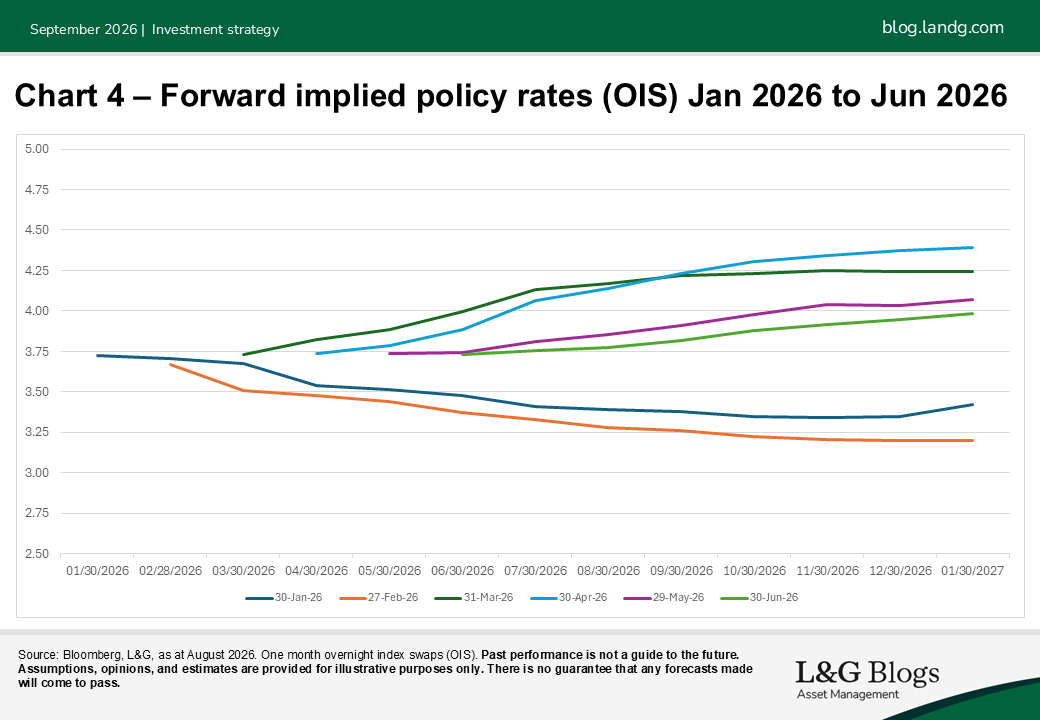
At the end of February however the joint US and Israeli military operation in Iran saw market-implied interest rate expectations rise sharply.
Money markets replaced expected cuts with hikes, tightening financial conditions, and providing policymakers time to assess the potential second-round impact of higher oil prices.
However, central banks reiterated a commitment to price stability (i.e. inflation targeting) and a willingness to respond with higher policy rates if required (See Central bank reaction: ‘Leaning in’.
Uncertainty in the UK
The near-term path of UK interest rates remains up for debate.
While it wouldn’t be the first time monetary policy followed market pricing, after a third member of the monetary policy committee voted for an increase in July, Governor Andrew Bailey emphasised that this shouldn’t be interpreted as “edging toward a hike”.
Furthermore, the BoE published a paper exploring the disparity between higher market implied policy rates and participant survey responses, citing an unusually high degree of uncertainty around the conflict in the Middle East and its macroeconomic effects.
The key unknown is for how long and by how much energy prices will push inflation above target and the knock-on effects for wage and price setting next year. High natural gas prices are a concern.
Encore, cash segmentation
For same-day liquidity and daily capital stability, we believe triple-A short-term money market funds can be the most appropriate investment strategy (i.e. for your operational cash). In the short term, they could also potentially outperform longer-duration alternatives were interest rates to rise unexpectedly.
However, to meet their dual objective, triple-A short-term money markets fund will typically operate within strict liquidity and duration limits, which can restrict returns over time. So, for reserve or strategic cash allocations, we believe that alternatives may be appropriate.
Higher forward interest rates was the cue for our first cash segmentation blog in 2022: Putting cash in its place, but taking advantage of an upward sloping money market curve is just one way these alternative strategies seek to generate additional return (we discussed some typical approaches in Cashing in), so it’s good practice to review the investment horizon for cash investments regularly.


Recommended content for you
Learn more about our business
We are one of the world's largest asset managers, with capabilities across asset classes to meet our clients' objectives and a longstanding commitment to responsible investing.