
Disclaimer: Views in this blog do not promote, and are not directly connected to any L&G product or service. Views are from a range of L&G investment professionals, may be specific to an author’s particular investment region or desk, and do not necessarily reflect the views of L&G. For investment professionals only.
No more free nature: The global economy can no longer afford its nature‑risk blind spot
Eroding ecosystems are challenging the idea that nature sits outside economic strategy, revealing overlooked risks.
Key takeaways:
- Nature loss is becoming a systemic financial risk and fragile ecosystems are eroding supply chains, asset values and economic stability.
- Regulators and markets are moving toward mandatory disclosure with the IPBES assessment and TNFD framework gaining traction.
- By uniting policy reform, corporate strategy and capital‑market practices, a coordinated agreement could help close the economy’s longstanding nature‑risk blind spot.
The claim that ‘nature is financially material’ has long been easy to dismiss, and one can understand why. For years, environmental NGOs warned that ecosystem degradation would eventually translate into economic risk. Yet global GDP continued to grow, markets performed strongly, and the predicted impacts rarely seemed to materialise. Nature and biodiversity were therefore often treated as local, social or environmental issues rather than strategic ones. The result is a persistent blind spot in how the economy understands nature‑related risk.
Evidence now indicates that nature’s ability to regenerate is no longer keeping pace with humanity’s use of natural resources[1]. The balance is shifting. As pressures accumulate, the resilience of key ecosystems is weakening, and the underlying assumption that nature is both ‘free’ and largely reserved for Corporate Social Responsibility (CSR) is being challenged. Nature loss is starting to affect supply chains, asset values and economic stability.
More than half of global GDP is moderately or highly dependent on natural systems such as water regulation, soil fertility and pollination. When these systems are eroded faster than they can recover, those dependencies become sources of financial risk rather than invisible inputs to production.
Strengthening the evidence base
At its 12th plenary in Manchester, the Intergovernmental Science‑Policy Platform on Biodiversity and Ecosystem Services (IPBES) released its Business and Biodiversity Assessment; the first global, systematic analysis of how businesses depend on and impact nature. Its conclusion is clear: nature and biodiversity loss now represents a ‘critical and pervasive systemic risk’ to the economy, financial stability and human wellbeing. More than 100 specific recommended actions for companies, investors and policymakers were approved by over 150 governments.
This is not advocacy. It is a risk assessment. Methodologically similar to the early work on climate that shifted regulatory and investor expectations a decade ago.
Dasgupta’s quiet revolution - A maturing economic understanding
Much of this thinking builds on The Economics of Biodiversity: The Dasgupta Review[2]. Its central insight is that nature is a form of capital, productive, finite and fragile. For decades, we have expanded our produced and human capital while drawing down natural capital, often recording this drawdown as income rather than recognising it as the erosion of an underlying asset.
Once nature is treated as capital, the tools of mainstream economics - pricing externalities, reforming subsidies, clarifying resource rights, aligning balance sheets with reality - become available. This is not a new economic ideology but an extension of familiar principles to a previously unmeasured asset base.
Shifting the cultural frame
This shift is visible outside policy circles. Finding Harmony: A King’s Vision[3] traces how ideas once seen as niche have increasingly aligned with emerging scientific assessments and with the concerns of financial institutions. The question is no longer about environmental virtue but about the stability of the systems that underpin economic activity.
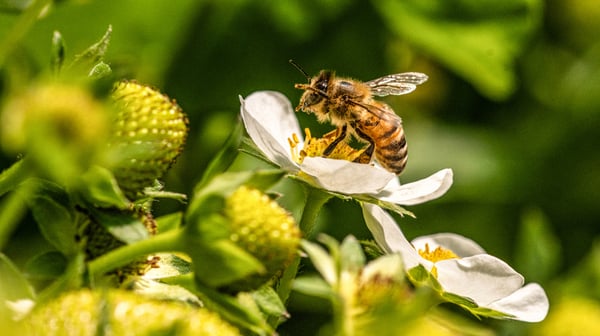
Pollination alone offers a simple illustration: IPBES estimates that between US$235bn and US$577bn worth of annual global food production relies on direct contributions by pollinators.[4]. When such contributions are damaged, the economic consequences are felt across markets.
Why COP17 in Yerevan matters
The UN Biodiversity Summit, Convention on Biodiversity COP17, in Yerevan Armenia, this October will be the first major global test of how seriously governments, regulators and markets are taking nature‑related risk. It follows the IPBES Nexus Assessment and the growing uptake of the Taskforce on Nature‑related Financial Disclosures (TNFD) recommendations.
The conference will show how far countries and stakeholders have progressed against the Kunming–Montreal Global Biodiversity Framework (GBF), the landmark agreement to halt and reverse biodiversity loss by 2030. Among other measures, the GBF calls on Parties to: (i) encourage and enable businesses to monitor, assess and disclose their nature‑related dependencies, impacts, risks and opportunities (Target 15); and (ii) scale up and align private and public financial resources with GBF goals and targets (Targets 18 and 19).
We believe if Yerevan is treated as just another conference, where the same actors repeat the same messages to each other, it will not deliver what is needed. If instead it is approached as a prudential moment, an opportunity for regulators, supervisors and markets to come together and clarify expectations, embedding nature into decision‑making and reduce systemic nature‑related risk, it could be a turning point
Towards a Yerevan accord
A credible outcome from COP17, a ‘Yerevan Accord’, could rest on three mutually reinforcing pillars: policy, corporate strategy and capital markets.
First, policy. Governments can enhance clarity and reduce uncertainty by aligning incentives with long‑term value creation. Mandatory, proportionate, TNFD‑aligned disclosures, phased in over time and starting with high‑impact sectors, would operationalise GBF Target 15. In parallel, the IFRS International Sustainability Standards Board (ISSB) is advancing nature‑related standard‑setting, drawing on the TNFD framework. An exposure draft, expected to be consulted on by October, would offer a credible global baseline for jurisdictions to converge on.
Reassessing subsidies that encourage nature‑negative activities is no longer only an environmental question; it is a fiscal one, given that public funds are often used to erode shared natural capital. The current debate in the European Union on the structure of the next seven‑year Common Agricultural Policy budget will be an important test of credibility.
Second, corporate strategy. For businesses, the key shift is to treat nature as a strategic constraint on a par with capital, technology and regulation. Across high‑impact sectors – such as food and beverage, consumer goods, apparel and extractives, leading firms are piloting regenerative agriculture, supplier land‑use due diligence and water‑basin stewardship, not as philanthropy but to manage input risks, respond to regulatory signals and meet evolving customer expectations.
We believe boards should formalise oversight of nature‑related risks and opportunities, set measurable outcomes, and embed location‑specific and supply‑chain commitments. These actions should be consistent with the governance, strategy, risk‑management and metrics‑and‑targets pillars of the TNFD framework and informed by its LEAP assessment approach.
Third, capital markets. If nature loss can impair cashflows, strand assets and destabilise regions, then we believe it belongs in mainstream financial analysis. The IPBES Business & Biodiversity Assessment outlines how these considerations may transmit into portfolio risk and long‑term returns, while also acknowledging current limitations in data availability and analytical methodologies. As data improves, supported by the TNFD framework and the ISSB’s forthcoming nature‑related exposure draft, nature‑related risks are beginning to be integrated into credit and equity analysis and valuations. Capital is gradually repricing, and stewardship, engagement and voting are increasingly being deployed.
A Yerevan Accord would recognise, consolidate and accelerate these shifts.
Closing the blind spot
This is not a rebranding of long‑standing environmental campaigns. The evidence now draws a clearer line between ecosystem degradation and financial outcomes, and the businesses already adapting are doing so for reasons of operational resilience, regulatory foresight and long‑term value protection.
Seen this way, the nature debate is not about choosing between growth and the environment. It is about whether our economic strategies recognise that future prosperity depends on the natural systems that support it, and whether we are prepared to close the nature‑risk blind spot that has treated those systems as effectively free and inexhaustible.
Against that backdrop, a meaningful Yerevan Accord could help close this blind spot by embedding, across policy, corporate governance and capital allocation, the recognition that nature is capital. Far from being radical, this would simply bring one of the defining risks of this century, an overlooked form of capital, into the mainstream of economic decision‑making. That is increasingly necessary, and long overdue.
Assumptions, opinions, and estimates are provided for illustrative purposes only. There is no guarantee that any forecasts made will come to pass.
[1] Humanity uses 70% more of the global commons than the Earth can regenerate | GEF
[2] An independent report on The Economics of Biodiversity
[3] Documentary in collaboration with The King’s Foundation
[4] Press release: Pollinators Vital to Our Food Supply Under Threat | IPBES secretariat


Recommended content for you
Learn more about our business
We are one of the world's largest asset managers, with capabilities across asset classes to meet our clients' objectives and a longstanding commitment to responsible investing.