
Disclaimer: Views in this blog do not promote, and are not directly connected to any L&G product or service. Views are from a range of L&G investment professionals, may be specific to an author’s particular investment region or desk, and do not necessarily reflect the views of L&G. For investment professionals only.
Still standing
Global growth has shrugged off an energy shock. Higher rates, fiscal strains and questions over the AI boom are likely to test its resilience.

Considering the surge in energy prices, global growth has proven remarkably resilient in 2026.
This reflects in part AI investment spending, from which the US is benefiting the most and remains a relative winner – with real GDP growth expected to be just above 2%.
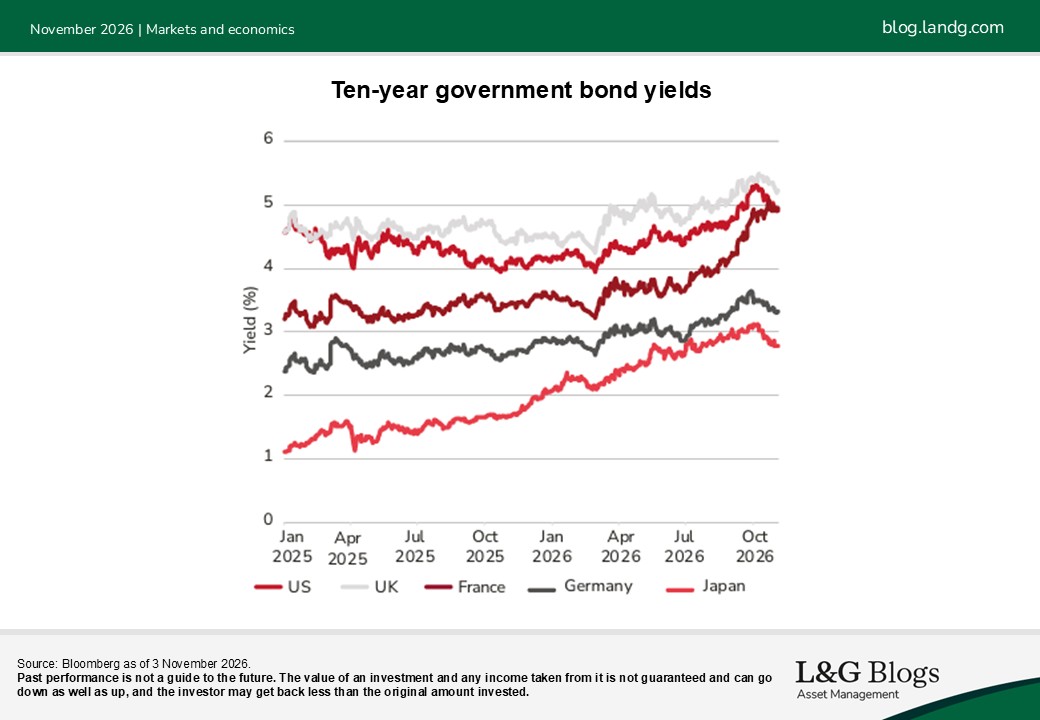
Indeed, consensus growth forecasts for 2027 have changed little in recent months and anticipate a similar pace of growth to continue even as inflation and interest rates have ratcheted higher.
Europe is lagging, with real GDP unlikely to exceed much more than 1%. This is primarily due to its exposure to surging natural gas prices and lack of large-scale fiscal support to cushion the real income squeeze from rising utility bills.
China’s growth is on track to hit its target, helped by government support and despite property weakness. Unemployment rates across the world generally appear steady, at close to full employment, with very limited signs of AI disruption at this stage.
What could go wrong?
Growth risks are relatively balanced. Further rises in energy prices could contribute to a broader inflation shock. The French presidential election, whose first round is in April 2027, adds to sovereign debt concerns. These could be amplified by an energy price shock and spillover into the European periphery.
There are also signs the market is beginning to reassess cash flow expectations from AI investment. The latest earnings reports from the hyperscalers revised up, once again, plans for such spending.
While this is supportive for growth in the near term, the large volume of AI debt issuance to fund the investment could lead to wider credit spreads and undermine equity prices. This could weigh on old economy investment and derail a consumer which has been supported by positive wealth effects.
Given the increasing size of equities in US household balance sheets, there is probably a greater sensitivity to any given percentage point decline in equity markets. Every era is marked by geopolitical uncertainty, but pressure on living standards has the potential to trigger social unrest, unexpected political responses and election results.
The bull case
There are also upside risks to growth:
- A resolution to the disruption in the Strait of Hormuz could lead to a rapid reversal in energy prices, supporting household real incomes
- Asset prices could renew their ascent on optimism and realisation of the productivity gains from AI adoption
- Central banks may deliver fewer rate hikes than the market currently expects, especially in the UK
The last of these looks most likely to us, as at the time of writing. While the world’s monetary guardians must balance a multitude of factors, there is less pent-up demand to sustain growth than during the inflation shock of 2022, and more labour market slack. This should limit second-round effects on wages and more persistent inflation.
Assumptions, opinions, and estimates are provided for illustrative purposes only. There is no guarantee that any forecasts made will come to pass.

Recommended content for you
Learn more about our business
We are one of the world's largest asset managers, with capabilities across asset classes to meet our clients' objectives and a longstanding commitment to responsible investing.