Disclaimer: Views in this blog do not promote, and are not directly connected to any L&G product or service. Views are from a range of L&G investment professionals, may be specific to an author’s particular investment region or desk, and do not necessarily reflect the views of L&G. For investment professionals only.
UK Budget: what it means for markets
The Autumn Budget has deferred some of the tougher fiscal choices while preserving headroom against the government’s fiscal rules. With gilts taking the announcement in their stride and a mixed response across UK equities, we assess the implications for investors.
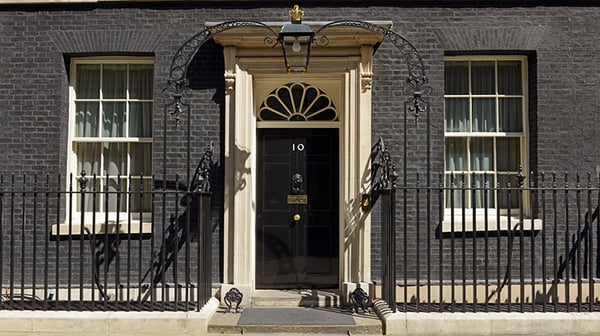
Wednesday’s budget, while billed as offering breathing space, delays a meaningful fiscal tightening for another year. This is partly due to the significant rise in gilt yields of around 100 basis points (bps) across the curve since the March forecasts. This adds to interest expense.
However, there have been no changes to the fiscal rules, and by maintaining a fiscal headroom of £15bn by delivering a tight policy beyond the next year, Chancellor John Healey has demonstrated that those rules are a binding constraint on government policy. There has been little reaction from the gilt market, which we believe suggests the credibility around the forecast to tighten policy, but just not yet, remains intact.
For economists, the details of the budget are less significant than the big picture of restraint. For households, there were several measures to help offset rising energy costs, including a £100 payment for approximately 20 million households, which adds £2.6bn to borrowing. For corporates, help for the High Street came in the form of a higher threshold for small business rates relief, but banks face an extra 3% surcharge for 15 months, and there will be increased taxes on gambling.
Tough choices deferred
Growth has been revised down for next year to 1% from 1.6% previously, but there has been little change to the estimate of the output gap, which means growth (and revenues) catch up again in future years
As expected, this budget has deferred the tough choices. By confirming the commitment to raise defence spending as a share of GDP and given the pressures on the NHS, real terms spending across other areas is under severe pressure in future years if the deficit is to meet current forecasts. This will have to be tackled in the spending review alongside the challenge of reforming the welfare state.
Gilts take budget in stride
The gilt market had a muted market reaction, with 10- and 30-year gilt yields around 3bps lower. The move has been almost entirely through real yields, with inflation breakevens broadly unchanged despite higher inflation forecasts from the Office for Budget Responsibility (OBR) and near-term borrowing. Overall, the initial market response suggests limited implications for Defined Benefit schemes.
The Debt Management Office (DMO) increased 2026/27 gilt issuance by £4.5bn to £250.6bn, but importantly continued the recent trend of shifting supply away from the long end: short and medium issuance rose by £2.7bn and £7.5bn respectively, while long-dated and index-linked issuance fell by £7.6bn and £0.9bn. This is relatively supportive for long-dated gilts and liability driven investment (LDI), with limited immediate liquidity implications given the muted market reaction.
Near term, we’ll watch whether the muted gilt reaction and stable inflation breakevens persist. Longer term, the key question is whether fiscal headroom is eroded by weaker growth, higher rates or borrowing, and whether the planned fiscal consolidation is delivered. Any slippage could ultimately mean greater gilt supply and renewed pressure on yields.
A mixed picture for equities
Overall, UK equity markets finished flat on Wednesday versus the open. Yet within that, particular sectors experienced outsized moves; the largest of which was housebuilders. The Your First Home (YFH) programme is a welcome demand-side intervention, filling a policy gap that has been absent since Help To Buy ended. The policy was largely pre-announced, around the Labour Party Conference, but the specifics were published in the Budget. Despite being supportive for housebuilder demand and mortgage affordability, the overall volume is disappointingly less than the market’s expectation when using previous schemes as a benchmark. At around half of what consensus expected, the funding is meaningful but not transformative. The fact that YFH will provide a much smaller tailwind than Help To Buy led to the sector underperforming on the day.
In our view, the implementation timetable is also less than ideal. Instead of the January start that many housebuilders were hoping for, the program will begin in the Spring. We believe that this could lead to first-time buyers delaying purchases.
Bank shares react
Meanwhile, bank shares have reacted positively to the news that the surcharge will only increase to 6% (from 3%). An increase of this magnitude was already priced into expectations, so there was some relief rally on the fact that the surcharge will only last 15 months and is not higher. In our view, this earnings impact is entirely manageable for the UK banks, especially as there are still levers they can pull to save cost.
The next key event to monitor is the 2027 Spending Review. This is where policymakers will map out the spending plan to achieve aims such as raising defence spending, and importantly how this will be funded – this is the point where more material reprioritisation of capital spend could creep in. UK equity market positioning has, in line with Europe, shifted more towards defensives in October. We will continue to monitor whether this Budget provides more optimism and we start to see a shift in that sentiment, or whether that rotation continues.
For professional investors only. Capital at risk.
Assumptions, opinions and estimates are for illustrative purposes only and are
subject to change. There is no guarantee that any forecast or projection will be
realised.

Recommended content for you
Learn more about our business
We are one of the world's largest asset managers, with capabilities across asset classes to meet our clients' objectives and a longstanding commitment to responsible investing.