
Disclaimer: Views in this blog do not promote, and are not directly connected to any L&G product or service. Views are from a range of L&G investment professionals, may be specific to an author’s particular investment region or desk, and do not necessarily reflect the views of L&G. For investment professionals only.
Iran conflict: implications for investors
We assess how the latest escalation in the Middle East may affect the macro and market outlook – and stress the importance of a long-term view.
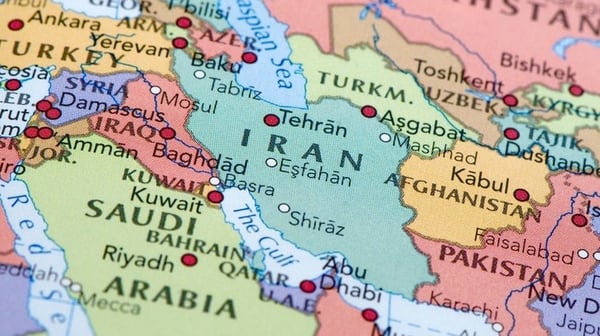
Following weeks of anticipation, the US and Israel launched airstrikes against Iran on Saturday, prompting retaliatory attacks on other countries in the region in the most serious escalation of the conflict since the 12-day war of June 2025.
As always with such geopolitical shocks, it’s important to clarify that we will focus here on the market and economic implications of this fast-moving situation, rather than its profound human and political consequences.
Immediate market reaction
Markets have been braced for such an outcome following the build-up of US military assets in the Gulf over recent weeks. Nonetheless, there had still been a residual hope that a peaceful resolution was possible.
In early trading, oil prices surged around 10%, equities slipped about 2% and developed-market government bond yields are largely unchanged – a response broadly consistent with past flare‑ups in the Middle East. Credit spreads were modestly wider: around 5bp for investment grade, 15bp for high yield.
What it means for the macro outlook
The stated US-Israeli objective of regime change, and the scale of retaliation across the region, raises the prospect of a more protracted engagement than the short-lived strikes on Iranian nuclear and military facilities last year.
While Iran has stated it has no intention to shut the all-important Strait of Hormuz, shipping companies have understandably decided to pause transits for the time being. As outlined in a blog last year, 20% of both global oil and liquified natural gas (LNG) flow through that narrow waterway.
Indeed, the macroeconomic implications hinge on the persistence and severity of disruption to the energy market, given its critical role in the global economy and sway over consumer prices.
Ready reckoners from the Federal Reserve suggest that every $10 on oil prices adds 50bps to inflation and takes the same off GDP, with the impact on Europe likely to be nearly twice as big due to the dependence on imported LNG.
The escalation comes at a time when headline inflation across most developed economies was finally back under control, after a long period of overshooting. That could help risk assets weather the storm, with central banks likely to look through the oil supply shock, in our view – unless the conflict is protracted and the energy price rise sustained.
Equity and credit markets have been preoccupied by concerns over AI disruption in recent weeks. This weekend's news gives investors something entirely different to worry about, not least given where we are in the market cycle.
What are we watching for?
For now, our base case remains that any disruption to global energy supply will likely be brief, as the oil price retreats once it becomes clear that disruptions are temporary, critical infrastructure is intact and military action does not escalate.
While near-term market volatility is probable, past experience indicates markets will likely focus again on supportive global economic fundamentals, consistent with most recent geopolitical shocks.
As we monitor this fluid situation, we are watching for:
- The reaction from the Iranian protest movement. History suggests that regime change with military means, without boots on the ground, is very difficult
- Any efforts to exacerbate the existing economic crisis in the country, through strikes on economic infrastructure like oil refineries, ports or pipelines
- The ability for oil to reach the end markets via other shipping routes, such as the Red Sea, and state of energy infrastructure and logistics across the Gulf
- Any major move in US Treasury yields. The marginal buyer of credit for the last 18 months has been focused on its all-in yield rather than what’s become a historically slim credit spread premium
On this last point, if yields decline on a flight-to-quality bid, then credit spread premiums will likely rise further and companies may look to raise more debt at more attractive all-in yield levels.
If yields rise to reflect higher oil prices, premiums may compress and a rush of corporate bond issuance previously expected for the coming week could be curtailed.
What this means for portfolios and our positioning
Our holdings in the region are relatively modest; direct exposure to Iranian assets is zero due to the international sanctions regime. Indirect exposure is largest in emerging market debt indices, where Middle East names constitute typically less than 25% of overall exposure.
Within our Multi-Asset team, we are underweight credit and neutral equity relative to our strategic baseline in dynamically managed funds.
Multi-asset funds are diversified by design. As a result, we have modest exposure to the region through our underlying exposures to emerging market and frontier market equity, and emerging market debt. We have no active views on the region.
Within our emerging market debt team, we have been underweight the region – particularly Gulf countries. This reflects tight valuations, sizeable issuance and, ahead of this weekend's developments, not enough premium to reflect geopolitical risks.
And within our Active Fixed Income team more broadly, in the context of very tight credit spreads, we are wary of buying into a potential pull back unless it causes spreads to move meaningfully enough.
Taking a long‑term view
This episode reinforces our long‑held view: while geopolitical events are inherently unpredictable, we believe their implications become manageable when investors are diversified, disciplined and focused on long‑term outcomes.
Diversification is never a guarantee against loss, but it remains one of the most effective tools we have to mitigate the impact of any single shock.
As always, we will continue to assess developments through a prepare, don’t predict lens – seeking to help our clients navigate uncertainty while keeping their long‑term objectives firmly in view.
Finally, many of us know people in the region directly affected by the conflict and the severe travel disruption it has caused. We sincerely hope our clients, their families and our colleagues – wherever they may be – remain safe and are able to return to normality as soon as possible.




Recommended content for you
Learn more about our business
We are one of the world's largest asset managers, with capabilities across asset classes to meet our clients' objectives and a longstanding commitment to responsible investing.