Disclaimer: Views in this blog do not promote, and are not directly connected to any L&G product or service. Views are from a range of L&G investment professionals, may be specific to an author’s particular investment region or desk, and do not necessarily reflect the views of L&G. For investment professionals only.
Growth signals beneath the surface
While oil prices and government bond yields have dominated market attention, resilient economic growth, China’s policy response and the AI investment boom may offer more meaningful clues about where the cycle is heading.

This is an article from our Q4 Active Fixed Income Outlook.
The third quarter has been dominated by the highly correlated relationship between higher oil prices and higher government bond yields. However, look beyond the headlines and you can see other powerful forces influencing markets, principally
a robust US economy and improving growth expectations outside of the US.
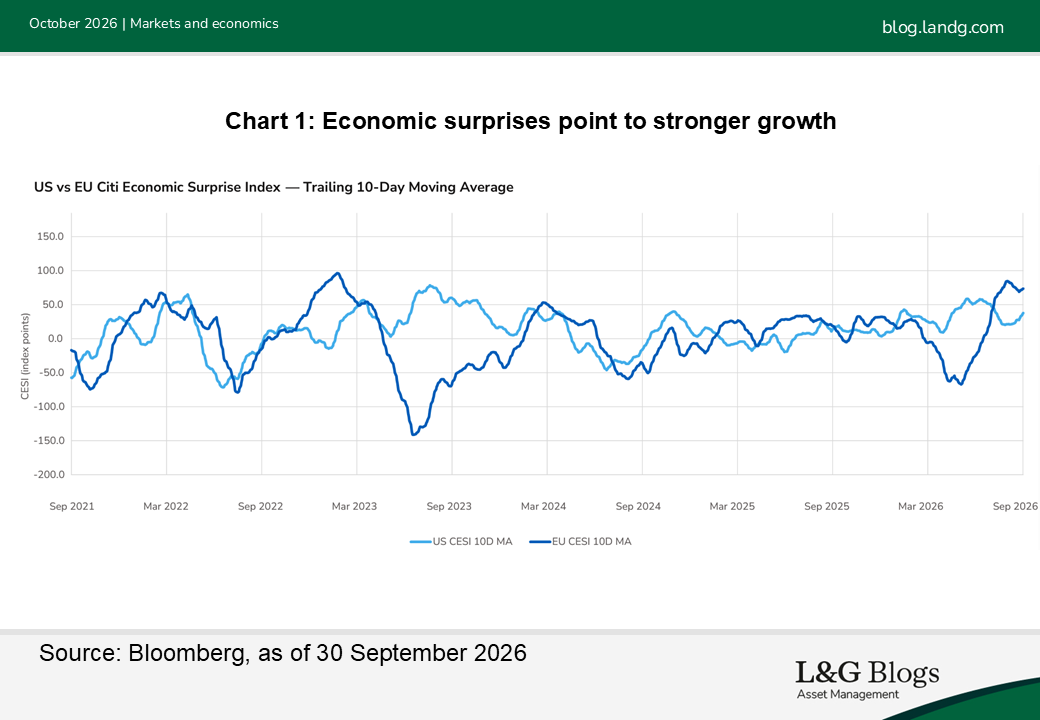
Chart 1 below highlights US and EU economic data that has surprised to the upside, underscoring a growth backdrop that appears more resilient than many may have expected. But we’re also interested in China’s ‘6 Networks’ infrastructure project in a global growth context. This could prove significant, even if it continues China’s longstanding preference for stimulating growth via debt-funded, capacity-expanding capital expenditure (capex) rather than consumption. At the very least, it is hopefully a sign that policymakers will more aggressively address the chronic demand shortfall in China. If they do that, the implications could be important not just for China but for the whole globe.
The value of an investment and any income taken from it is not guaranteed and can go down as well as up, and the investor may get back less than the original amount invested. Assumptions, opinions, and estimates are provided for illustrative purposes only. There is no guarantee that any forecasts made will come to pass.
This backdrop has been sufficient to force central banks into action. The US Federal Reserve raised interest rates in September, just nine months after cutting rates in December 2025. That marked the shortest pivot from easing to tightening since the mid-1980s.
At the same time, it remains impossible to stray too far from the AI theme. We continue to marvel at arguably the biggest investment boom America has seen in our lifetimes. No longer just an equity market story, the involvement of international debt markets is now crucial to the AI investment thesis, while also providing useful signals to gauge where we are in the cycle. As the cycle evolves from mid to late stage, early participants can earn outsized returns (e.g. technology equity) while credit expands to fund more of it (hyperscaler debt). At this stage, it is important to recognise the opposing dynamics at play: debt carries fixed obligations that fall due on a set schedule, whereas equity returns are tied to future outcomes.
We keep a close eye on signs of euphoria, where prices detach from cashflows,“this time is different” narratives appear, and leverage and novices pile in. It brings us back to one of the golden rules of investing: managing money well has little to do with how smart you are and a lot to do with how you behave. Consider the abrupt unwind of the AI-focused Situational Awareness hedge fund, that grew rapidly in under two years before suffering a 67% loss in July 2026, [1] and the painful impact of single-stock leveraged ETFs when prices stop rising. These episodes are a reminder of the behaviours that emerge when investors start to see organic returns as less compelling. When demand for yield or spread or growth exceeds the natural supply of ‘good’ assets, the system turns to manufacturing its own or buying existing ones at the ‘wrong’ price, because it is incentivised to do so. The history of market cycles is full of examples where periods of strong confidence lay the foundations for future volatility.
M&A activity has always been a clear expression of corporate management confidence in both the cycle and their own business prospects. Even away from AI-related capex generating extraordinary demand for capital, deal volumes continue to accelerate. Second quarter data suggested we were on track for the highest volumes this year, but the third quarter has been surprisingly slower.
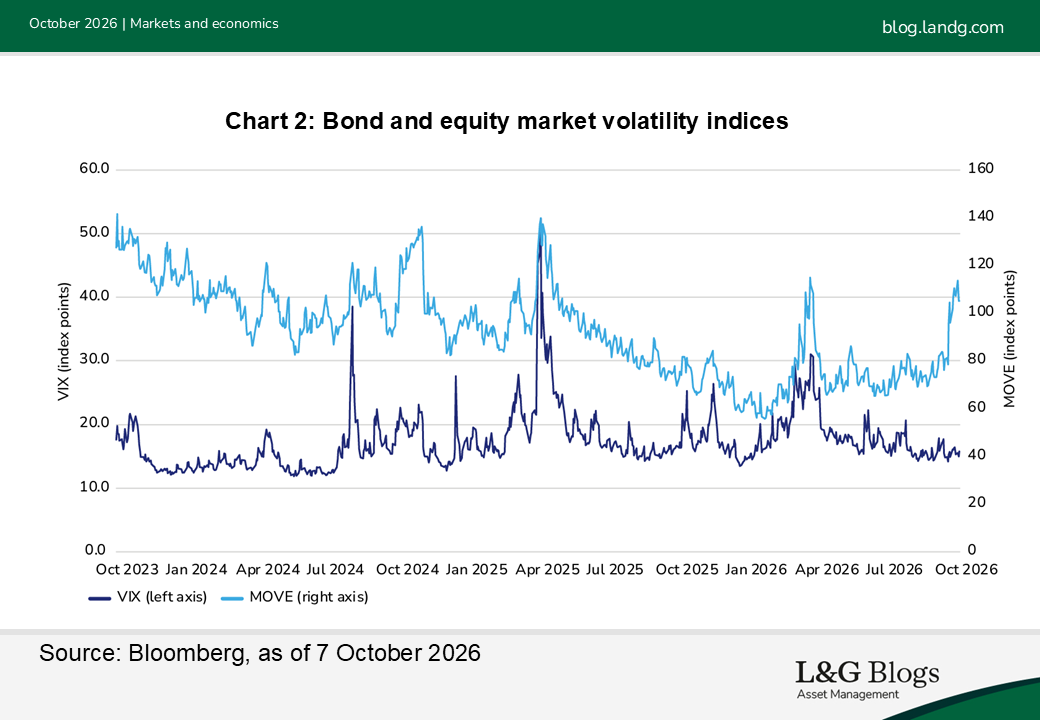
During stronger periods of growth, M&A volumes tend to be less sensitive to rates overall as these can be sizeable, strategic acquisitions. However, how rates rise (or fall) is important. The US 10-year Treasury yield has risen almost 1% since the end of the second quarter.[2] Looking at the relationship between bond and equity market volatility (chart 2) suggests that some stabilisation in rates markets may be desirable for management teams contemplating transactions.
My colleague, Jason Shoup, discusses the implications of the upcoming midterm elections in the US through the lens of AI in the next article. However, a possible consequence of a Democrat ‘clean sweep’ next month is that companies accelerate their plans if they believe they only have two years to get larger, more aggressive deals done.
For now, we remain keen observers. Rates may be high by recent historical standards, but economic growth is real and company earnings are strong. We aim to be sceptical rather than cynical as we watch more concerning signs of excessive
risk-taking in financial markets.
The value of an investment and any income taken from it is not guaranteed and can go down as well as up, and the investor may get back less than the original amount invested. Assumptions, opinions, and estimates are provided for illustrative purposes only. There is no guarantee that any forecasts made will come to pass.
1. Reuters as of 1 August 2026
2. Bloomberg as of 7 October 2026
This is an article from our Q4 Active Fixed Income Outlook.

Recommended content for you
Learn more about our business
We are one of the world's largest asset managers, with capabilities across asset classes to meet our clients' objectives and a longstanding commitment to responsible investing.