
Disclaimer: Views in this blog do not promote, and are not directly connected to any L&G product or service. Views are from a range of L&G investment professionals, may be specific to an author’s particular investment region or desk, and do not necessarily reflect the views of L&G. For investment professionals only.
What’s behind the rise of alternatives?
In the first of a new blog series, we introduce alternatives, explaining the value this diverse collection of asset types can bring to a portfolio. We examine why investors may consider alternatives as a potential diversifier if they are concerned about concentration risks in traditional benchmark strategies.

Key takeaways:
|
For decades, the traditional equity and fixed income portfolio – often in a 60/40 split – has been the cornerstone of long-term investing.
However, increasing market concentration in market-cap weighted strategies have exposed its potential limitations. Examples of concentration include:
- The Bloomberg Euro Aggregate Corporate Total Return Index has almost 30% sector exposure in banking.[1]
- In global equities, the MSCI World Index has become more concentrated in terms of company and country exposure. The weight of the top 10 constituents represent around 27% of the index.[2]
- The weight of the US similarly dominates the MSCI World at around 70%.[3]
These numbers have all increased meaningfully over the past decade.
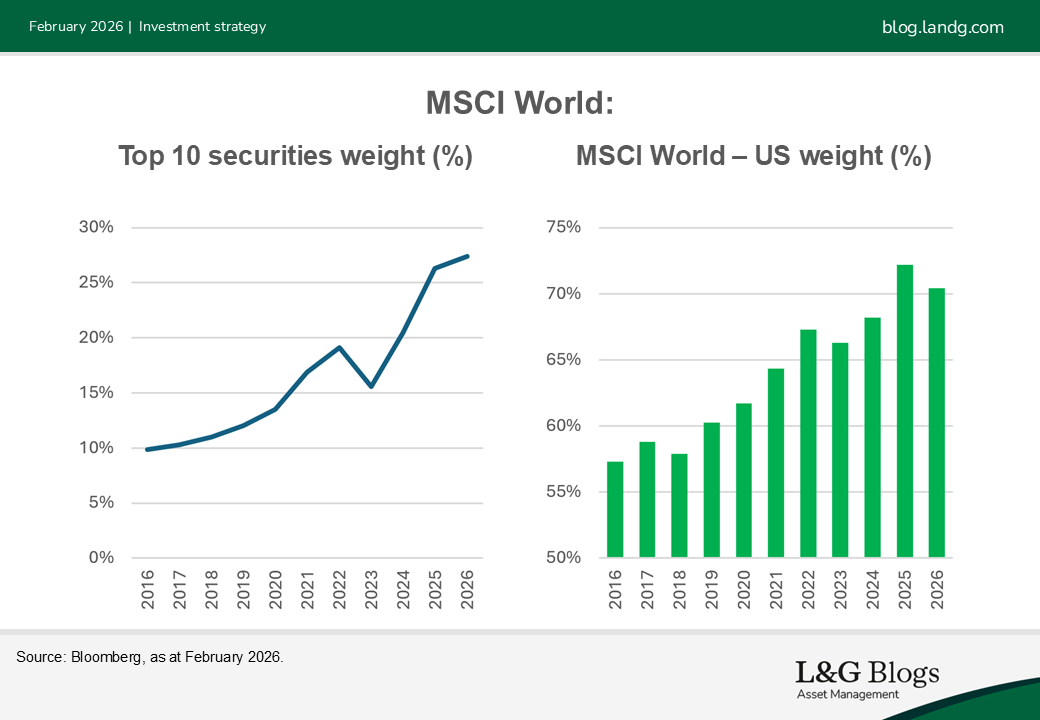
Alternative investments are increasingly seen as a way to broaden portfolio exposures and reduce reliance on traditional market cycles. That last part is important: diversification is good, but diversification with returns is better.
Unsurprisingly, investors therefore seek out exposures that can potentially accomplish both.
The broad church of alternatives
Alternatives encompass a wide range of asset classes. Commodities, for example, are often used as a hedge against inflation and geopolitical risk. Their prices are driven by supply and demand dynamics as well as political risk events rather than corporate earnings, making them a useful diversifier.
Moreover, investors can use commodity carry strategies next to traditional long-only commodity baskets in order to extract the commodity curve premium that has historically provided uncorrelated returns versus traditional asset classes.
Real estate and infrastructure are often categorised as ‘real assets’. Both can provide steady income streams and are typically less sensitive to equity market swings. Real estate investments, whether direct or via listed vehicles, offer exposure to rental income and long-term capital appreciation. Infrastructure assets such as toll roads, utilities or renewable energy projects tend to be more defensive, with revenues often linked to long-term contracts or regulated pricing. These sectors can help smooth portfolio returns, though they are not immune to interest rate risk or policy changes.
Private equity has attracted significant interest in recent years. By investing in companies outside public markets, investors aim to capture growth and operational improvements over time. The potential for higher returns is balanced by longer investment horizons, illiquidity and the need for careful manager selection. As access improves, more investors are considering private equity as part of their strategic allocation.
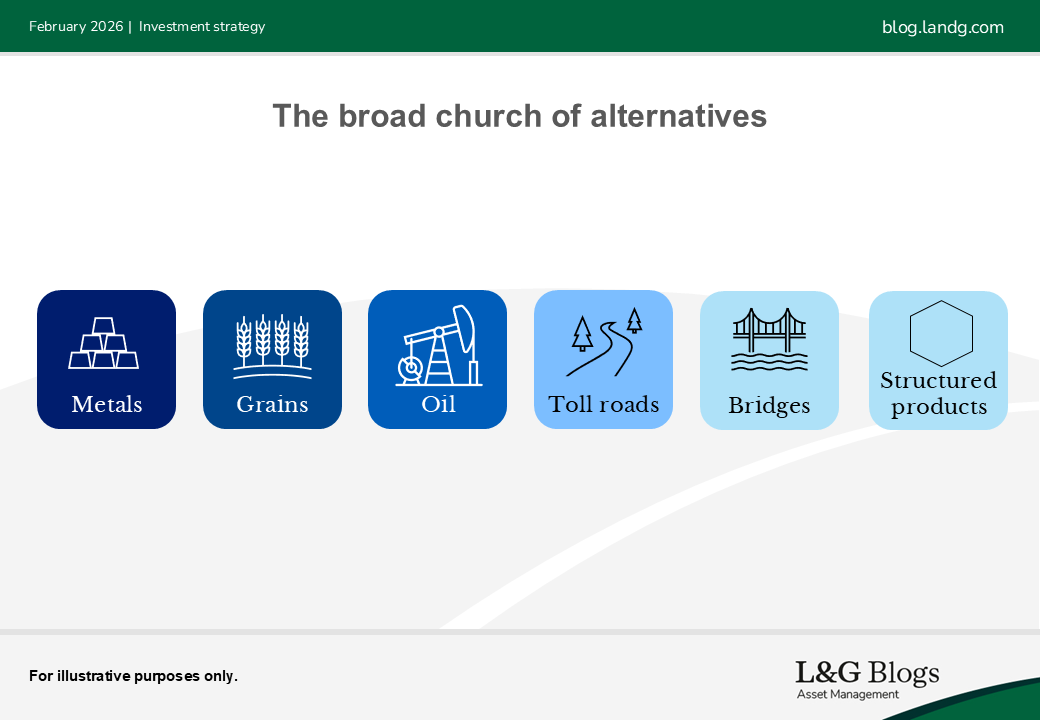
Structured products represent a different type of alternative. These are customised instruments that combine traditional assets with derivatives to create specific payoff profiles. They can aim to offer capital protection, enhanced yield or tailored exposure to market movements. While they provide flexibility, they also carry complexity and credit risk, and are typically less liquid than standard investments.
Given the breadth of the alternatives universe, investors need to be selective. Each asset class has its own risk-return profile, liquidity characteristics and role within a portfolio. Importantly, diversification does not guarantee protection against loss, and alternatives should be integrated thoughtfully based on investment objectives and constraints.
What are liquid alternatives?
One way investors are accessing alternatives more flexibly is through liquid alternative strategies. These are typically mutual funds or ETFs that aim to replicate hedge fund-like approaches within regulated structures. They offer daily liquidity, transparency and lower minimum investments, making them potentially attractive to those seeking diversification without the lock-up periods and barriers to entry of traditional alternatives.
In summary, alternatives are not a single solution but a broad category offering varied exposures. Their growing popularity reflects a desire for more resilient portfolios in an environment where traditional diversification may no longer be sufficient.
Used appropriately, they can help investors navigate complex market conditions and pursue long-term outcomes with greater flexibility.
In the next instalment of this blog, we’ll dive deeper into liquid alternatives, explaining the types of strategies investors can access through regulated structures.
[1] Source: Bloomberg, as at January 2026.
[2] Source: Bloomberg, as at February 2026.
[3] Source: Bloomberg, as at February 2026.
*It should be noted that diversification is no guarantee against a loss in a declining market.

Recommended content for you
Learn more about our business
We are one of the world's largest asset managers, with capabilities across asset classes to meet our clients' objectives and a longstanding commitment to responsible investing.